
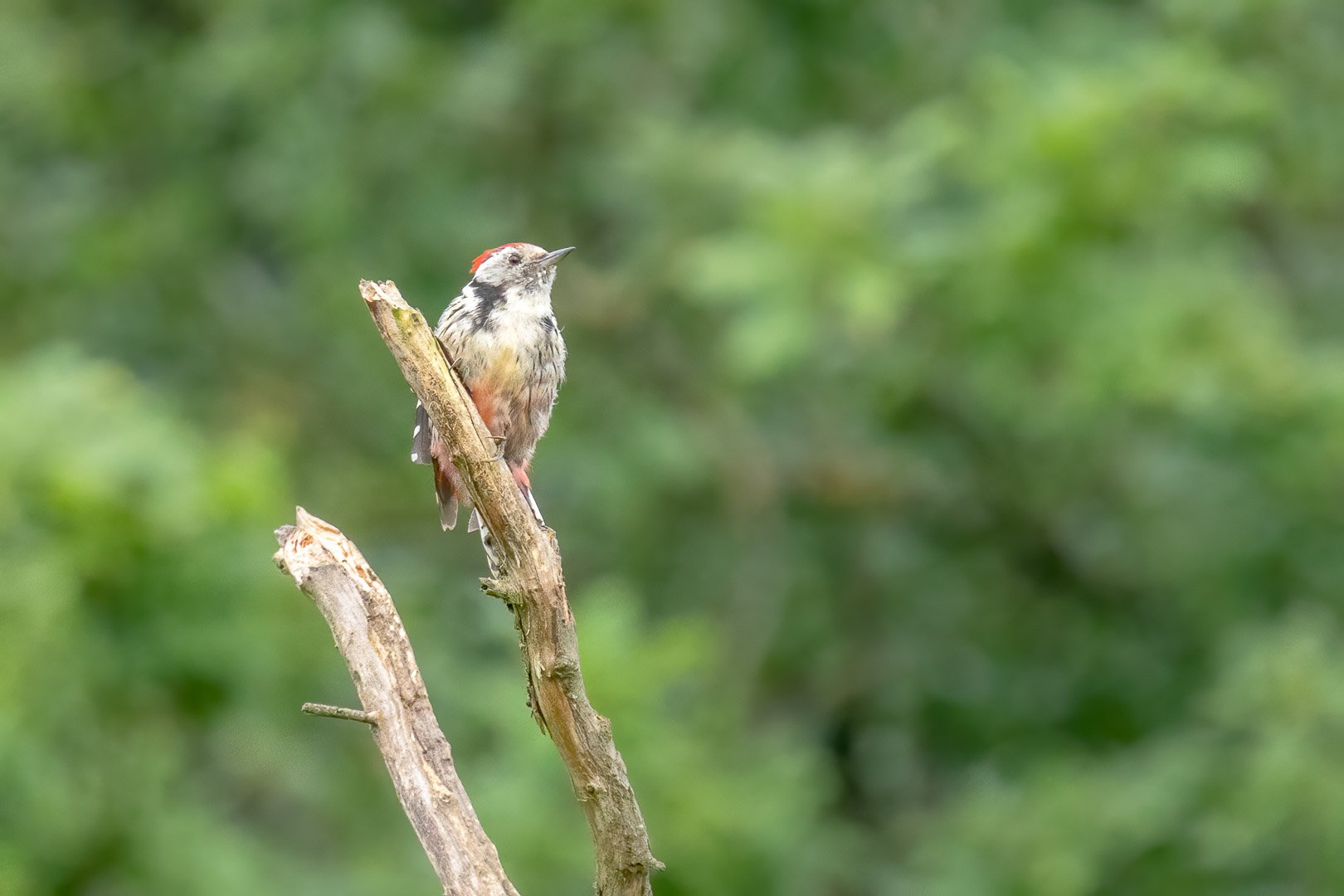
Middle Spotted Woodpecker (Leiopicus medius)
- Introduction
- Habitat and Distribution of Middle Spotted Woodpecker
- Diet and Feeding Habits of Middle Spotted Woodpecker
- Breeding and Reproduction of Middle Spotted Woodpecker
- Conclusion
“Discover the distinctive markings and impressive drumming of the Middle Spotted Woodpecker.”
Introduction
The Middle Spotted Woodpecker (Leiopicus medius) is a small to medium-sized woodpecker species found in Europe and parts of Asia. They are known for their distinctive black and white plumage, with a red crown on males and a black crown on females. Middle Spotted Woodpeckers are primarily insectivores, using their strong bills to drill into trees and extract insects. They are also known for their drumming behavior, which is used to communicate with other woodpeckers and establish territory. Despite being relatively common in some areas, Middle Spotted Woodpeckers are considered a species of conservation concern due to habitat loss and fragmentation.
Habitat and Distribution of Middle Spotted Woodpecker
The Middle Spotted Woodpecker (Leiopicus medius) is a small bird that belongs to the woodpecker family. It is found in Europe and Asia, and is known for its distinctive red crown and black and white striped back. In this article, we will take a closer look at the habitat and distribution of this fascinating bird.
Habitat
The Middle Spotted Woodpecker is a forest bird that prefers deciduous and mixed forests. It can also be found in parks and gardens with mature trees. The bird is known to be quite adaptable and can survive in fragmented forests and even in urban areas with suitable habitat.
The Middle Spotted Woodpecker is a cavity-nesting bird, which means it excavates holes in trees to create a nest. It prefers to nest in dead or dying trees, as they are easier to excavate. The bird also uses these holes for roosting and foraging.
Distribution
The Middle Spotted Woodpecker is found in Europe and Asia. Its range extends from western Europe to central Asia, including countries such as France, Germany, Poland, Russia, and Kazakhstan. The bird is also found in the Caucasus Mountains and the Middle East.
In Europe, the Middle Spotted Woodpecker is found in a patchy distribution, with populations concentrated in certain areas. In some countries, such as Germany and Poland, the bird is considered to be declining due to habitat loss and fragmentation.
Conservation Status
The Middle Spotted Woodpecker is listed as a species of Least Concern by the International Union for Conservation of Nature (IUCN). However, some populations are declining due to habitat loss and fragmentation. In some countries, such as Germany and Poland, the bird is considered to be a conservation priority.
Conservation efforts for the Middle Spotted Woodpecker include habitat restoration and management, as well as the creation of artificial nest sites. In some areas, the bird is also protected by law.
Conclusion
The Middle Spotted Woodpecker is a fascinating bird that is found in Europe and Asia. It is a forest bird that prefers deciduous and mixed forests, and is known for its cavity-nesting behavior. While the bird is considered to be of Least Concern by the IUCN, some populations are declining due to habitat loss and fragmentation. Conservation efforts are underway to protect this unique bird and its habitat.
Diet and Feeding Habits of Middle Spotted Woodpecker
The Middle Spotted Woodpecker (Leiopicus medius) is a small bird that belongs to the woodpecker family. It is found in Europe and Asia, and is known for its distinctive red crown and black and white striped back. In this article, we will take a closer look at the diet and feeding habits of this fascinating bird.
The Middle Spotted Woodpecker is primarily insectivorous, meaning that it feeds on insects. It is known to feed on a variety of insects, including beetles, ants, and caterpillars. It also feeds on spiders and other small invertebrates. The bird uses its sharp beak to peck at the bark of trees, looking for insects hiding underneath. It also uses its long tongue to extract insects from crevices in the bark.
In addition to insects, the Middle Spotted Woodpecker also feeds on fruits and nuts. During the autumn and winter months, when insects are scarce, the bird will turn to these alternative food sources. It is known to feed on a variety of fruits, including berries, apples, and pears. It also feeds on nuts, such as acorns and hazelnuts.
The Middle Spotted Woodpecker is a cavity-nesting bird, meaning that it nests in holes in trees. It is known to excavate its own nest holes, using its sharp beak to peck away at the wood. The bird will also use existing holes in trees, such as those created by other woodpeckers or natural decay. The bird will line its nest hole with wood chips and other materials, creating a cozy home for its young.
The Middle Spotted Woodpecker is a solitary bird, meaning that it prefers to hunt and feed alone. However, during the breeding season, the bird will form pairs and work together to raise its young. The male and female will take turns incubating the eggs and feeding the chicks. The chicks will fledge after about three weeks, and will continue to be fed by their parents for several more weeks.
In conclusion, the Middle Spotted Woodpecker is a fascinating bird with a varied diet and unique feeding habits. It is primarily insectivorous, but will also feed on fruits and nuts when insects are scarce. The bird is a cavity-nesting species, and will excavate its own nest holes or use existing ones. It is a solitary bird, but will form pairs during the breeding season to raise its young. Overall, the Middle Spotted Woodpecker is a valuable member of the ecosystem, helping to control insect populations and contributing to the biodiversity of its habitat.
Breeding and Reproduction of Middle Spotted Woodpecker
The Middle Spotted Woodpecker (Leiopicus medius) is a small bird that belongs to the woodpecker family. It is found in Europe and Asia, and is known for its distinctive red crown and black and white striped back. In this article, we will take a closer look at the breeding and reproduction of this fascinating bird.
Breeding Season
The breeding season for the Middle Spotted Woodpecker typically begins in April and lasts until June. During this time, the male woodpecker will establish a territory and begin to attract a mate. He will do this by drumming on trees and making a series of calls.
Once a mate has been attracted, the pair will begin to build a nest. The nest is typically located in a tree cavity, which the woodpeckers will excavate themselves. The female will lay between 4 and 7 eggs, which she will incubate for around 12 days.
Parental Care
Once the eggs have hatched, both parents will take turns feeding the chicks. The chicks are born naked and blind, and are completely dependent on their parents for food and warmth. The parents will regurgitate food for the chicks, which typically consists of insects and larvae.
As the chicks grow, they will become more active and begin to explore their surroundings. They will also start to develop feathers, which will eventually allow them to fly. The parents will continue to feed and care for the chicks until they are ready to leave the nest.
Fledging
The Middle Spotted Woodpecker chicks typically fledge around 20-25 days after hatching. At this point, they are able to fly and will leave the nest to explore their surroundings. However, they will still be dependent on their parents for food and protection for several weeks.
Once the chicks have fledged, the parents will continue to care for them until they are fully independent. This can take several weeks, during which time the parents will teach the chicks how to find food and avoid predators.
Conclusion
Breeding and reproduction are important aspects of the Middle Spotted Woodpecker’s life cycle. During the breeding season, the male will establish a territory and attract a mate, and the pair will build a nest and raise their chicks. The parents will provide food and protection for the chicks until they are ready to leave the nest, and will continue to care for them until they are fully independent.
Overall, the Middle Spotted Woodpecker is a fascinating bird that plays an important role in its ecosystem. By understanding its breeding and reproduction habits, we can gain a greater appreciation for this unique species and the important role it plays in our environment.
Conclusion
The Middle Spotted Woodpecker (Leiopicus medius) is a small woodpecker species found in Europe and Asia. They have distinctive black and white markings on their feathers and are known for their drumming behavior. Their diet consists mainly of insects and they prefer to live in deciduous forests. The Middle Spotted Woodpecker is considered a species of least concern, but their populations have declined in some areas due to habitat loss and fragmentation. Conservation efforts are being made to protect their habitats and promote their breeding success.

You May Also Like