
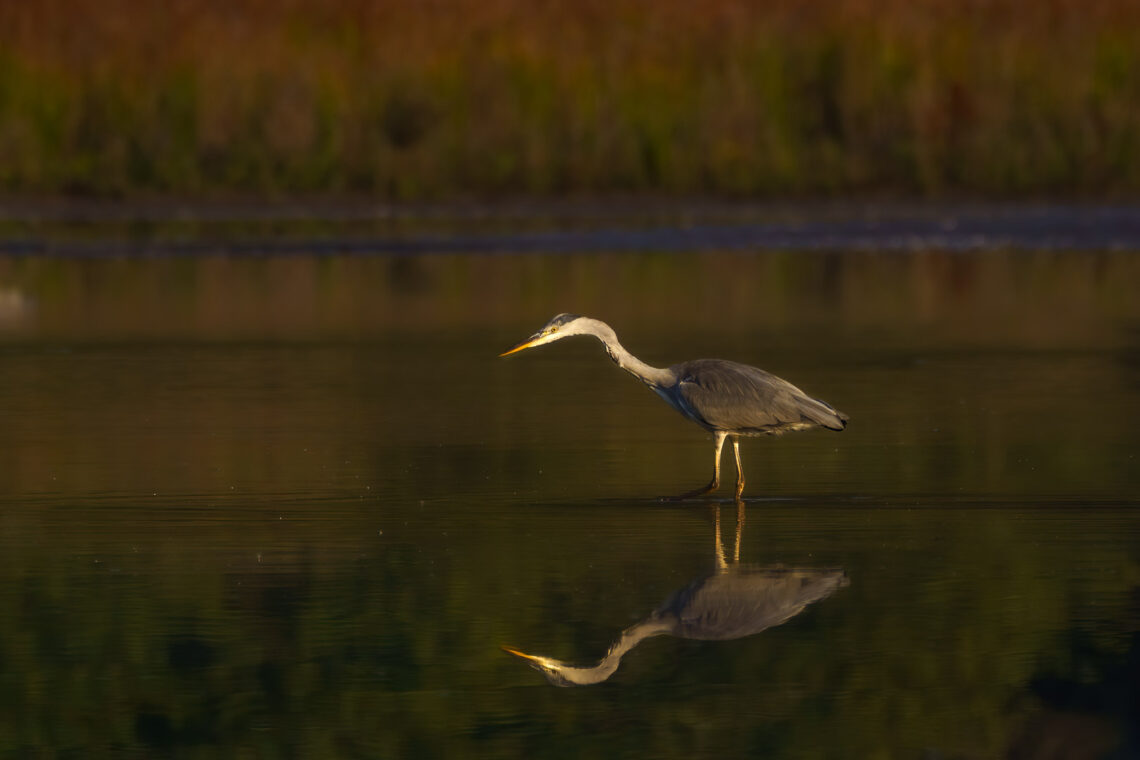
Grey Heron (Ardea cinerea)
Graceful and Majestic: Ardea cinerea – The Elegant Heron
Introduction
Ardea cinerea, commonly known as the grey heron, is a large wading bird belonging to the Ardeidae family. It is widely distributed across Europe, Asia, and parts of Africa. With its distinctive grey plumage, long legs, and a wingspan of up to 2 meters, the grey heron is an impressive and easily recognizable bird. It is known for its solitary nature and can often be found near bodies of water, such as lakes, rivers, and marshes, where it hunts for fish and other small aquatic creatures. The grey heron has adapted well to various habitats and is considered a successful and adaptable species.
The Life Cycle and Behavior of Ardea cinerea
The Life Cycle and Behavior of Ardea cinerea
Ardea cinerea, commonly known as the grey heron, is a majestic bird that can be found in various parts of the world. This species is known for its distinctive appearance and fascinating behavior. In this article, we will explore the life cycle and behavior of Ardea cinerea, shedding light on the intriguing aspects of this remarkable bird.
The life cycle of Ardea cinerea begins with the breeding season, which typically occurs between February and April. During this time, the herons engage in elaborate courtship displays to attract a mate. These displays involve various behaviors, such as stretching their necks, flapping their wings, and making loud calls. Once a pair is formed, they proceed to build a nest together.
Nests are usually constructed in tall trees or on cliffs, and they are made from sticks and twigs. The female lays a clutch of three to five eggs, which both parents take turns incubating for around 25 to 26 days. This shared responsibility highlights the strong bond between the male and female heron.
After the eggs hatch, the parents continue to care for their offspring. The chicks are initially covered in white down feathers and are entirely dependent on their parents for food. The adult herons regurgitate partially digested fish and other small prey into the mouths of their hungry chicks. This feeding process continues for several weeks until the chicks are strong enough to leave the nest.
Once the young herons fledge, they begin to explore their surroundings and learn essential survival skills. They gradually develop their flight abilities, which are crucial for their future journeys. During this period, the parents continue to provide food and guidance to their offspring, ensuring their successful transition into adulthood.
As Ardea cinerea matures, it adopts a solitary lifestyle. These birds are known for their patience and stealth when hunting for food. They often stand motionless in shallow water, waiting for their prey to come within striking distance. With lightning-fast reflexes, the heron extends its long neck and sharp beak to snatch fish, amphibians, and even small mammals from the water.
Ardea cinerea is also an adaptable species, capable of thriving in various habitats. While they are commonly found near bodies of water, such as lakes, rivers, and marshes, they can also be seen in urban areas, foraging in ponds and even gardens. This adaptability has contributed to their widespread distribution across Europe, Asia, and parts of Africa.
During the non-breeding season, Ardea cinerea may migrate to warmer regions in search of food. These migratory patterns can vary depending on the population and geographical location. Some herons may travel long distances, while others may remain in their breeding grounds throughout the year.
In conclusion, Ardea cinerea, or the grey heron, exhibits a fascinating life cycle and behavior. From courtship displays and nest-building to parental care and hunting techniques, these birds captivate us with their grace and adaptability. Understanding the life cycle and behavior of Ardea cinerea allows us to appreciate the intricate dynamics of this remarkable species and the importance of conserving their habitats for future generations to enjoy.
Habitat and Distribution of Ardea cinerea
Ardea cinerea, commonly known as the grey heron, is a majestic bird that can be found in various habitats across Europe, Asia, and parts of Africa. Its habitat and distribution are closely linked to its feeding habits and nesting preferences.
The grey heron is a highly adaptable species, capable of thriving in a wide range of environments. It can be found in both freshwater and saltwater habitats, including lakes, rivers, marshes, estuaries, and coastal areas. This versatility allows the grey heron to take advantage of different food sources and nesting opportunities.
One of the key factors influencing the distribution of the grey heron is the availability of suitable feeding grounds. These birds are opportunistic predators, feeding on a variety of aquatic creatures such as fish, amphibians, reptiles, and small mammals. They are also known to consume insects, crustaceans, and even small birds. As a result, they are often found near bodies of water that support a diverse range of prey species.
In addition to food availability, the grey heron’s choice of habitat is also influenced by nesting requirements. These birds typically build their nests in tall trees, often near water bodies. The presence of suitable nesting sites is crucial for the survival and breeding success of the species. In areas where suitable trees are scarce, grey herons may resort to nesting on cliffs or man-made structures such as buildings or pylons.
The distribution of the grey heron is not limited to a specific region or climate. They can be found in both temperate and tropical regions, as long as the necessary resources are available. In Europe, they are widespread, with populations found from the British Isles to Russia. In Asia, they can be found as far east as Japan and as far south as India. In Africa, they are present in countries such as Morocco, Egypt, and South Africa.
Migration patterns also play a role in the distribution of the grey heron. In regions with harsh winters, such as northern Europe, many grey herons migrate to warmer areas during the colder months. These migratory movements can cover long distances, with some individuals traveling thousands of kilometers to reach their wintering grounds. The availability of suitable habitats and food sources in these wintering areas is crucial for the survival of the migrating birds.
Overall, the grey heron’s habitat and distribution are shaped by a combination of factors, including food availability, nesting requirements, and migration patterns. Their adaptability allows them to thrive in a variety of environments, from freshwater wetlands to coastal areas. Understanding these factors is essential for conservation efforts aimed at protecting the grey heron and its habitats. By preserving the diverse ecosystems that support these birds, we can ensure their continued presence in our natural landscapes.
Conservation Efforts for Ardea cinerea
Ardea cinerea, commonly known as the grey heron, is a majestic bird that can be found in various parts of the world. With its long legs, graceful flight, and distinctive grey plumage, the grey heron is a sight to behold. However, like many other species, the grey heron faces numerous threats to its survival. In response to these challenges, conservation efforts have been implemented to protect and preserve this remarkable bird.
One of the primary threats to the grey heron is habitat loss. As human populations continue to expand, wetlands and other natural habitats are being destroyed or degraded. These wetlands are crucial for the grey heron, as they provide an abundant source of food and nesting sites. To address this issue, conservation organizations have been working to protect and restore wetland habitats. By creating protected areas and implementing sustainable land management practices, these efforts aim to ensure that the grey heron has access to suitable habitats for breeding and foraging.
Another significant threat to the grey heron is pollution. Chemical pollutants, such as pesticides and heavy metals, can accumulate in the water and prey of the grey heron, leading to detrimental effects on their health and reproductive success. To combat this issue, conservationists are advocating for stricter regulations on the use of harmful chemicals and promoting the adoption of environmentally friendly farming practices. Additionally, efforts are being made to clean up polluted water bodies and restore their ecological balance. By reducing pollution levels, these initiatives aim to safeguard the grey heron and other wildlife from the harmful effects of contamination.
Invasive species also pose a threat to the grey heron. These non-native species can outcompete native species for resources and disrupt the delicate balance of ecosystems. In some cases, invasive predators can directly prey on the grey heron and its eggs. To address this issue, conservationists are working to control and eradicate invasive species in areas where the grey heron is particularly vulnerable. By removing these threats, these efforts aim to create a more favorable environment for the grey heron to thrive.
Climate change is another pressing concern for the grey heron. Rising temperatures and changing weather patterns can disrupt the availability of food and alter the timing of breeding seasons. To mitigate the impacts of climate change, conservation organizations are advocating for the reduction of greenhouse gas emissions and the implementation of measures to adapt to changing conditions. By addressing the root causes of climate change and promoting resilience in ecosystems, these efforts aim to safeguard the grey heron and its habitat from the adverse effects of a warming planet.
In conclusion, the grey heron faces numerous threats to its survival, including habitat loss, pollution, invasive species, and climate change. However, through conservation efforts, progress is being made to protect and preserve this remarkable bird. By focusing on habitat protection, pollution reduction, invasive species control, and climate change mitigation, conservation organizations are working tirelessly to ensure a future where the grey heron can continue to grace our wetlands and inspire awe in all who encounter it. It is our collective responsibility to support these efforts and ensure the long-term survival of this iconic species.
Conclusion
In conclusion, Ardea cinerea, commonly known as the grey heron, is a large wading bird found in various parts of the world. It is known for its distinctive grey plumage, long legs, and long neck. The grey heron is a skilled hunter, primarily feeding on fish, amphibians, and small mammals. It is a solitary bird that nests in trees near water bodies, and its population is generally stable. Overall, the grey heron plays an important role in maintaining the balance of ecosystems it inhabits.
You May Also Like